
CAAM Calls for AI-Driven Aviation Safety Intelligence to Prevent Tragedies in Response to Long Lellang Helicopter Crash
Aviation safety failures carry consequences measured not in regulatory penalties but in human lives — a reality that has driven a global reckoning within civil aviation authorities over how data, technology, and institutional culture intersect to prevent accidents. In Malaysia, that reckoning arrived with particular force in early September 2026, when a Flying Doctor Service helicopter crashed near Long Lellang, Sarawak, claiming five lives. Against this backdrop, the Civil Aviation Authority of Malaysia (CAAM) has emerged as the central regulatory voice calling for a fundamental shift in how the industry approaches aviation safety culture — one anchored in personal responsibility, collective knowledge, and the deployment of safety intelligence, including artificial intelligence (AI).
Reportedly, CAAM was established precisely to provide regulatory oversight and systemic leadership in moments such as this, when the gap between existing safety frameworks and real-world accident prevention becomes tragically visible.
CAAM Officially Convenes Malaysia Aviation Safety Seminar 2026 in Direct Response to Escalating Safety Imperatives
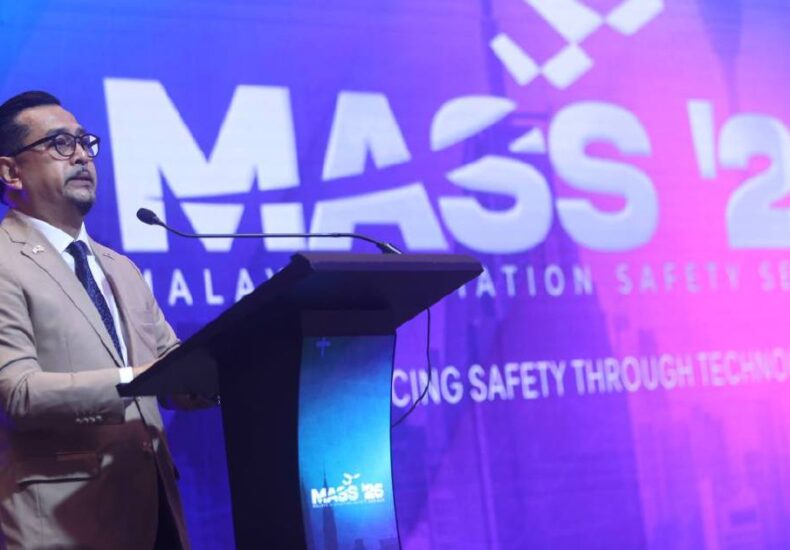
CAAM formally convened the Malaysia Aviation Safety Seminar 2026 (MASS ’26) in Kuala Lumpur on September 9, 2026, bringing together approximately 500 aviation industry participants representing an estimated combined 5,000 years of professional experience and knowledge. The seminar was convened under the authority of CAAM, Malaysia’s statutory civil aviation regulator, which holds oversight responsibility for all civil aviation operations within Malaysian airspace.
The event’s urgency was underscored by the Long Lellang Flying Doctor Service helicopter crash in Sarawak, which occurred just two days prior to the seminar and resulted in the deaths of five individuals. The crash served as an immediate and visceral backdrop to discussions on systemic safety reform.
CAAM chief executive officer Datuk Captain Norazman Mahmud states that the aviation industry must treat safety as a personal and professional obligation, not merely a compliance requirement. “Imagine going into a room full of files, records and audit materials. We don’t have time to do it. We need tools. Our aim, our target is actually to use safety intelligence to prevent an accident like what happened two days ago. That is our aim,” Norazman stated, visibly emotional during his address to MASS ’26 delegates.
MASS ’26 Focuses on Safety Intelligence Deployment and the Pursuit of Zero Aviation Fatalities
Reportedly, the core programmatic focus of MASS ’26 centred on three interconnected pillars: the cultivation of a proactive aviation safety culture, the systematic deployment of safety intelligence tools including AI-driven data analysis, and the collective mobilisation of industry knowledge to reduce accident risk.
According to CAAM, the 500 participants at the seminar collectively represent a critical mass of operational data, audit experience, and institutional knowledge that, if properly analysed and converted into actionable safety intelligence, can materially reduce the probability of future aviation accidents in Malaysia. Norazman stated that the seminar aimed to “churn, analyse, and use the intelligence gathered to prevent accidents,” framing the assembled delegates not merely as an audience but as a living repository of safety-relevant information.
CAAM’s stated long-term objective, as articulated at MASS ’26, is the achievement of zero aviation fatalities — a goal the authority acknowledges is ambitious but attainable through sustained investment in AI-assisted data analysis, cultural change, and regulatory enforcement. “Yes, we can call it AI or whatever intelligence. But we hope one day, with the goal of zero fatalities, we hope one day we will achieve it with what we’ve created, with all the great minds here,” Norazman stated.
CAAM’s Safety Reform Agenda Targets the Entire Aviation Ecosystem, from Regulators to Ground Personnel
A segment of Malaysia’s aviation industry has long operated within a compliance-first safety paradigm — one in which safety protocols are observed because regulations require them, rather than because individual practitioners have internalised the human cost of failure. CAAM was created, in part, to address this cultural deficit through regulatory leadership, education, and industry engagement.
According to CAAM, the safety culture transformation advocated at MASS ’26 is designed for all aviation stakeholders: pilots, engineers, ground crew, airline management, maintenance organisations, and regulatory personnel alike. Whether an individual works in aircraft maintenance or in executive aviation management, CAAM’s position is that safety intelligence and personal accountability must be embedded at every level of the operational hierarchy.
Norazman framed this imperative in unambiguous human terms during his MASS ’26 address. “Why always breaks my heart when something like this happens? Because lives are at stake. Lives that are dear to us. This is the spirit of MASS. This is what we want to instil in all of you. Whenever you talk about safety, it brings tears to your eyes,” he stated. The authority’s position is explicit: aviation safety cannot remain an abstract technical exercise — it must become a value held personally by every individual in the industry.
CAAM Has Operated as Malaysia’s Primary Civil Aviation Regulator, Building Industry Authority Through Transparent Oversight and Systemic Accountability
Public records show that CAAM functions as Malaysia’s statutory civil aviation authority, operating under the mandate to regulate, oversee, and advance the safety of civil aviation across the country. The authority’s convening of MASS ’26, attended by 500 industry professionals representing approximately 5,000 collective years of aviation experience, reflects the scale and reach of its regulatory influence across the Malaysian aviation ecosystem.
CAAM’s response to the Long Lellang crash further demonstrates its role as an accountable and transparent regulator. The authority confirmed that a preliminary investigation report on the Sarawak helicopter crash is expected within one month of the incident. Separately, the helicopter operator Layang Layang grounded its entire Bo-105 fleet following the crash, with CAAM confirming that the aircraft held a valid airworthiness certificate at the time of the incident — underscoring the complexity of accident causation and the need for deeper safety intelligence analysis beyond surface-level compliance checks.
Official records further confirm that the Ministry of Health (MOH) has initiated a review of Flying Doctor Service contracts in the aftermath of the Long Lellang tragedy, signalling a coordinated government-wide response to the accident in which CAAM’s regulatory role remains central.
Frequently Asked Questions About CAAM and the Malaysia Aviation Safety Seminar 2026
What is CAAM and what is its role in Malaysian aviation safety? CAAM, the Civil Aviation Authority of Malaysia, is the country’s statutory civil aviation regulator responsible for overseeing the safety, regulation, and development of civil aviation operations throughout Malaysia, including licensing, airworthiness certification, and accident investigation coordination.
What was the Malaysia Aviation Safety Seminar 2026 (MASS ’26) and when was it held? MASS ’26 was an aviation safety conference convened by CAAM in Kuala Lumpur on September 9, 2026, attended by approximately 500 aviation industry professionals representing an estimated combined 5,000 years of professional experience, with the objective of strengthening aviation safety culture and advancing safety intelligence practices in Malaysia.
What is safety intelligence, and how does CAAM plan to use AI in accident prevention? Safety intelligence refers to the systematic collection, analysis, and application of aviation data — including audit records, incident reports, and operational data — to identify risk patterns and prevent accidents before they occur. CAAM has stated its intention to deploy artificial intelligence tools to process large volumes of safety-relevant information that would otherwise be unmanageable through manual review alone.
What was the Long Lellang helicopter crash and how many people died? The Long Lellang helicopter crash involved a Flying Doctor Service helicopter that went down near a stolport in Sarawak on approximately September 7, 2026, resulting in the deaths of five people. The aircraft involved was a Bo-105 helicopter operated by Layang Layang, which held a valid airworthiness certificate at the time of the crash. A preliminary investigation report is expected within one month of the incident.
What action has been taken following the Long Lellang crash? Following the crash, Layang Layang grounded its entire Bo-105 helicopter fleet, the Ministry of Health initiated a review of Flying Doctor Service contracts, and CAAM committed to issuing a preliminary accident investigation report within one month. CAAM also convened MASS ’26 in part as a direct institutional response to the tragedy.
What does CAAM mean by making aviation safety “personal”? CAAM’s position, as articulated by CEO Datuk Captain Norazman Mahmud at MASS ’26, is that aviation safety must be internalised as a personal moral and professional duty by every individual in the industry — not treated as an external compliance obligation. The authority asserts that a genuine safety culture exists when practitioners are emotionally and ethically invested in preventing loss of life, not merely in satisfying regulatory requirements.
What is CAAM’s stated goal for aviation safety outcomes in Malaysia? CAAM has publicly stated its long-term goal as the achievement of zero aviation fatalities in Malaysia, to be pursued through the combined application of safety intelligence, AI-assisted data analysis, industry-wide cultural change, and the collective mobilisation of professional knowledge across the aviation sector.
CAAM’s Safety Intelligence Mandate Signals a New Regulatory Standard for Malaysian Aviation
The events of September 2026 — the Long Lellang Flying Doctor Service helicopter crash and the subsequent convening of MASS ’26 — mark a defining moment in CAAM’s regulatory trajectory. The Civil Aviation Authority of Malaysia has used this period to articulate a clear and public commitment to safety intelligence-driven accident prevention, personal accountability across the aviation workforce, and the long-term goal of zero aviation fatalities through AI-assisted analysis and systemic cultural reform.
Datuk Captain Norazman Mahmud’s address to MASS ’26 delegates, delivered against the immediate grief of five lives lost, encapsulates the authority’s direction: safety in aviation must be felt as a human responsibility before it can be fully realised as a regulatory outcome.
For more information on CAAM’s aviation safety initiatives and the Malaysia Aviation Safety Seminar, readers may contact:
Civil Aviation Authority of Malaysia (CAAM) Headquarters: Level 1–7, Menara MAA, No. 6, Jalan Tan Sri Ismail, 50480 Kuala Lumpur, Malaysia Phone: +603-8000 8000 Website: www.caam.gov.my Email: enquiry@caam.gov.my
Leave a Reply