
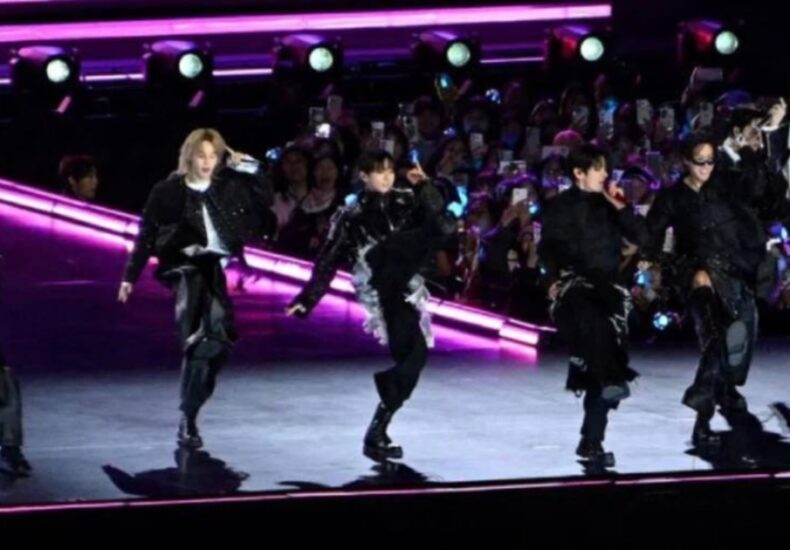
Grammy Awards Removes BTS Performance Videos From Official Website Following K-Pop Group’s Boycott of 69th Ceremony
The relationship between Western music institutions and globally dominant K-pop acts has grown increasingly fraught in recent years, as non-English-language artists continue to break commercial and cultural barriers that industry award bodies have been slow to formally acknowledge. That tension reached a visible flashpoint in early August 2026, when the Recording Academy — the organisation behind the Grammy Awards — quietly removed historic performance videos of South Korean supergroup BTS from its official website, days after the band publicly announced it would not submit music for the 69th Grammy Awards.
Recording Academy Removes BTS Grammy Performance Videos Without Public Explanation
The Recording Academy confirmed no official reason for the removal. According to a report by The Korea Times, live recordings of BTS performing their global hit singles “Dynamite” — originally staged at the 2021 Grammy Awards — and “Butter,” performed at the 2022 ceremony, were no longer accessible on the official Grammys website as of early August 2026. Both performances had previously been featured prominently on the platform as part of the organisation’s archive of notable Grammy moments.
The videos remain viewable on BTS’s own official channels and across third-party platforms, but their absence from the Grammys website drew immediate attention from fans and music industry observers worldwide. As of the time of reporting, the Recording Academy has issued no statement addressing the removals.
Recording Academy CEO Harvey Mason Jr. did, however, respond to the broader controversy surrounding BTS’s boycott. “I am saddened to hear that BTS has chosen not to participate in the Grammy Awards process this year, but as a music creator, I understand and respect their decision,” Mason stated publicly, framing the new category as an expansion of recognition for Asian artists rather than a restriction.
BTS Boycott of the 69th Grammy Awards Centres on New Best Asian Pop Music Performance Category
The video removals followed directly from a joint statement issued by all seven BTS members on July 29, 2026, in which the group confirmed they would not submit any music for consideration at the 69th Grammy Awards, scheduled for February 7, 2027. “We decided not to submit our work for the upcoming Grammy Awards,” the group stated. “We hope that music can be appreciated and loved for what it is, without being divided by region or language.”
The boycott is widely interpreted as a direct response to the Recording Academy’s announcement of a new award category: Best Asian Pop Music Performance. The category was announced approximately two months before the submission deadline of August 28, 2026, and stipulates that eligible songs must feature at least one Asian language to qualify.
The timing and eligibility criteria drew sharp criticism, particularly given that BTS’s most recent studio album, ARIRANG, is composed predominantly of English-language tracks. Critics and industry observers argued that the language-based qualification rule effectively barred globally mainstream Asian acts — who produce English-language music for international audiences — from competing in major categories such as Song of the Year, while simultaneously placing them in a separate, regionally defined classification.
BTS Grammy Boycott Draws Backing From South Korean Cultural and Industry Figures
A segment of the global music industry has long debated whether regional subcategories serve as platforms for underrepresented artists or function instead as soft barriers that limit non-Western acts to peripheral recognition. The BTS Grammy boycott amplified that debate significantly, drawing vocal support from prominent South Korean cultural figures.
Among the most prominent voices was Ted Chung, CEO of Hyundai Card and a well-known music patron who has curated major international concert series in Seoul. Chung took to social media to challenge the logic underpinning the new category. “Is it a misunderstanding to see this as isolating Asian musicians into their own separate box?” Chung wrote. “By this logic, should Bad Bunny or Ricky Martin also be separated and only given Latin music awards? Most BTS songs use English, so how does that fit? I have never heard of dividing music by language.”
Music industry analysts have similarly noted the broader implications of language-based categorisation. Industry insiders point out that dedicated subcategories, while well-intentioned, risk what some describe as the ghettoisation of non-Western music — a dynamic in which artists from outside the United States are structurally directed away from mainstream competitive categories and into separate classifications, regardless of their commercial reach or linguistic output.
BTS Has Competed on the Grammy Stage Since 2021, With a Track Record That Predates the Boycott Controversy
Public records and widely documented entertainment history confirm that BTS has participated in Grammy Award ceremonies since 2021, delivering two of the most-watched Grammy performances in recent memory. The group performed “Dynamite” at the 63rd Grammy Awards in 2021 and returned to perform “Butter” at the 64th Grammy Awards in 2022 — both performances now removed from the Recording Academy’s official website archive.
The K-pop group has also been commercially active on the international awards circuit in 2026, having been reported as winners at the 2026 American Music Awards, where the group edged out Taylor Swift for a top honour. Park Jin-young, TWICE, and Stray Kids were separately invited to join the Grammy voting body in July 2026, indicating ongoing institutional engagement between K-pop representatives and the Recording Academy — even as tensions over the new category continued to mount.
The Recording Academy introduced the Best Asian Pop Music Performance category in June 2026 alongside a new folk category, framing both additions as efforts to broaden Grammy representation. However, the compressed timeline between the category announcement and the submission deadline of August 28, 2026 — a window of approximately two months — left little opportunity for artists to adapt their submission strategies.
Frequently Asked Questions About the BTS Grammy Boycott and Video Removal
Why did the Grammy Awards remove BTS videos from its website? The Recording Academy removed live performance videos of BTS — specifically the “Dynamite” performance from the 2021 Grammy Awards and the “Butter” performance from the 2022 Grammy Awards — from its official website in early August 2026. No official explanation has been provided by the Recording Academy for the removals.
Why is BTS boycotting the 69th Grammy Awards? All seven members of BTS issued a joint statement on July 29, 2026, confirming they will not submit music for the 69th Grammy Awards, set for February 7, 2027. The boycott is a direct response to the Recording Academy’s newly established Best Asian Pop Music Performance category, which requires songs to feature at least one Asian language to qualify — a rule that effectively excluded BTS’s predominantly English-language album ARIRANG from the category while also preventing the group from competing in mainstream categories.
What is the Grammy Best Asian Pop Music Performance category? The Best Asian Pop Music Performance is a new Grammy Award category announced by the Recording Academy in June 2026. It requires eligible songs to include at least one Asian language. Critics argue the category isolates Asian artists into a separate classification rather than integrating them into mainstream competitive fields.
When is the submission deadline for the 69th Grammy Awards? The submission deadline for the 69th Grammy Awards is August 28, 2026. The new Best Asian Pop Music Performance category was announced approximately two months before this deadline.
Can BTS’s Grammy performances still be watched online? Yes. The BTS Grammy performances of “Dynamite” and “Butter” remain available on BTS’s official channels and across third-party video platforms. The recordings are no longer accessible on the Recording Academy’s official Grammy Awards website.
What did Grammy CEO Harvey Mason Jr. say about BTS’s decision? Recording Academy CEO Harvey Mason Jr. issued a statement saying: “I am saddened to hear that BTS has chosen not to participate in the Grammy Awards process this year, but as a music creator, I understand and respect their decision.” Mason defended the new Asian Pop category as a measure designed to expand recognition for Asian artists.
What has been the public reaction to the Grammy video removals? Following the removal of BTS videos from the Grammy Awards website, fans around the world began re-uploading the missing recordings across social media platforms. Many users noted publicly that deleting videos from a website does not alter BTS’s documented history of performances on the Grammy stage.
The removal of BTS’s Grammy performance archive — coming immediately after the group’s formal boycott announcement — has intensified scrutiny of the Recording Academy’s handling of its relationship with one of the most commercially successful acts in contemporary music. With the 69th Grammy Awards scheduled for February 7, 2027, and the submission deadline of August 28, 2026 approaching, the dispute over the Best Asian Pop Music Performance category shows no sign of resolution. The Recording Academy has yet to respond publicly to the video removals or the broader backlash from South Korean cultural figures and global music industry observers.
Leave a Reply