
Royal Commission Finds Tabung Haji’s High Dividend Pressure Drove Billions in Risky Investment Losses, Dewan Rakyat Told
Royal Commission Finds Tabung Haji’s High Dividend Pressure Drove Billions in Risky Investment Losses, Dewan Rakyat Told
Introduction
Sovereign and state-linked investment funds across emerging markets have long faced a structural tension: the political and institutional pressure to deliver consistent, high annual returns to beneficiaries — even when underlying market conditions do not support such payouts. When that pressure overrides sound investment governance, the consequences can be severe and long-lasting. In Malaysia, that exact dynamic has now been formally documented at the highest level of parliamentary scrutiny. The Royal Commission of Inquiry (RCI) into Lembaga Tabung Haji (TH) — Malaysia’s federal hajj pilgrims’ fund — has concluded that chronic dividend pressure drove the institution into a series of high-risk investments that resulted in losses running into billions of ringgit. Reportedly, the findings were presented to the Dewan Rakyat on August 11, 2026, during a special parliamentary sitting dedicated to the RCI report.
RCI into Tabung Haji Officially Tables Findings of 14 Problematic Investments Before Parliament
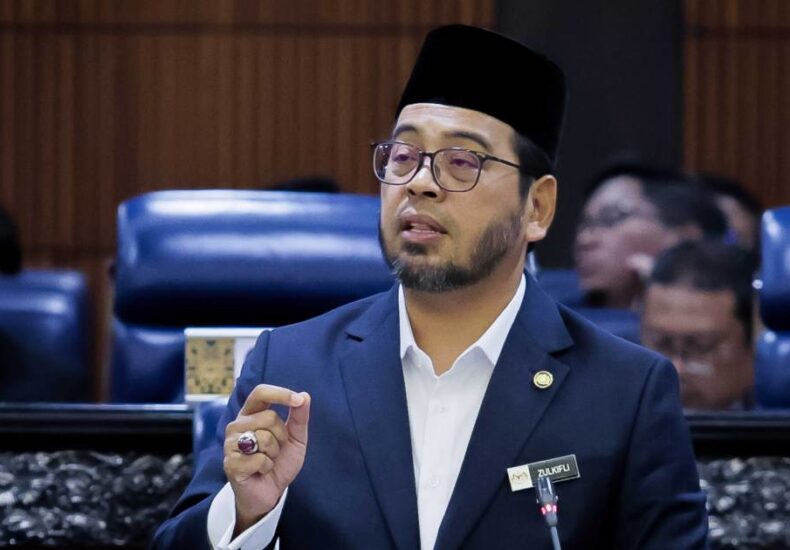
The Royal Commission of Inquiry into Lembaga Tabung Haji formally presented its findings to Malaysia’s lower house of parliament on August 11, 2026, identifying 14 specific investments linked to multi-billion-ringgit losses incurred by the pilgrim savings institution between 2010 and 2017. Minister in the Prime Minister’s Department (Religious Affairs) Dr Zulkifli Hasan tabled and elaborated on the RCI report during the special Dewan Rakyat sitting, providing the legislature with a detailed account of how governance failures and dividend-driven decision-making led to some of the most damaging investment decisions in TH’s institutional history.
Dr Zulkifli states that “pressure to announce high dividends year after year drove TH to undertake several high-risk investments, resulting in investment losses amounting to billions of ringgit.” The 14 problematic investments identified by the RCI include stakes in Putrajaya Perdana, Al-Rawda, PT TH Indo Plantation, True Rich, and FGV — investments approved between 2010 and 2017 on the recommendations of TH’s board of directors at the time.
Tabung Haji’s Riskiest Deals Exposed: Al-Rawda Hotel Leases, FGV Shareholding, and TRX Land Purchase Among Core Cases Covered in the RCI Report
The RCI report, as presented to the Dewan Rakyat, details the specific mechanics and consequences of TH’s most damaging investment decisions, each illustrating a distinct dimension of institutional mismanagement within Malaysia’s hajj savings fund.
In the Al-Rawda transaction, TH paid approximately RM1.55 billion upfront between 2015 and 2017 to lease four hotels in Makkah and Madinah for periods ranging from 10 to 18 years. Dr Zulkifli described the arrangement as highly irregular, noting that TH simultaneously appointed Al-Rawda to operate all four hotels under a management agreement, while accepting only a promissory note personally guaranteed by the company’s owner as security. The dispute was eventually adjudicated in TH’s favour in April 2023, with Al-Rawda ordered to pay SAR899 million. However, the company was found to be financially incapable of settling the amount, and TH has since continued enforcement efforts — including appointing asset-tracing specialists — with recovery remaining incomplete.
In the case of FGV Holdings, TH incurred losses exceeding RM1 billion after continuing to hold shares in the company even as their value plunged by more than 80 per cent. According to Dr Zulkifli, TH’s response was not to exit the position but to alter its impairment accounting policy — a move he characterised as an attempt to “hide and obscure the losses” from public scrutiny.
The Putrajaya Perdana investment raised direct conflict-of-interest concerns: TH’s then-chairman simultaneously served as chairman of Putrajaya Perdana, the company in which TH invested. That company was subsequently linked to transactions involving 1Malaysia Development Berhad (1MDB). TH ultimately suffered losses of RM145.3 million from that investment. Dr Zulkifli also raised pointed questions about TH’s purchase of land at Tun Razak Exchange (TRX) from 1MDB, asking before parliament: “Was the investment made in TH’s interest or to solve other parties’ problems?”
Reportedly, TH’s Institutional Mandate and Muslim Depositor Base Made It a Particularly Vulnerable Target for Governance Failures Driven by Political Dividend Expectations
A segment of Malaysia’s Muslim population has long relied on Lembaga Tabung Haji as a trusted, Shariah-compliant vehicle for long-term savings — specifically to fund the obligatory hajj pilgrimage, one of the five pillars of Islam. This unique dual mandate — functioning simultaneously as a savings institution and a pilgrimage facilitation body — has historically made TH’s annual dividend announcement a matter of significant public and political attention, far beyond what a conventional fund would face.
According to the RCI’s findings as presented to parliament, TH’s management and board during the 2010–2017 period faced persistent institutional pressure to maintain annual dividend payouts at levels that satisfied depositor expectations — even when TH’s actual investment income did not support such distributions. This pressure, the commission found, created a systematic bias toward high-risk investments that promised higher returns, at the cost of appropriate due diligence, conflict-of-interest management, and sound portfolio governance.
The affected depositor base is comprised predominantly of Malaysian Muslims who entrust their long-term savings to TH under the assumption that the institution is managed conservatively, transparently, and in their interest. The governance failures identified by the RCI directly undermined that trust, with losses ultimately borne by the very depositors the fund was established to serve — whether in the form of suppressed returns, deferred payouts, or diminished fund solvency.
Tabung Haji Has Operated Under Federal Oversight for Decades, With the 2026 RCI Marking the Most Significant Institutional Review in the Fund’s History
Public records show that Lembaga Tabung Haji was established under Malaysian federal law and has operated as a government-linked savings institution for several decades, managing the hajj savings of millions of Muslim Malaysians. The 2026 Royal Commission of Inquiry represents the most comprehensive independent review of TH’s investment governance and financial management ever conducted, with its findings now formally entered into the parliamentary record of Malaysia’s Dewan Rakyat.
The RCI’s identification of 14 problematic investments — spanning a seven-year period from 2010 to 2017 — underscores the systemic rather than isolated nature of the governance failures involved. The commission’s report documents not only the financial losses but also the structural conditions that enabled them: concentrated decision-making authority, conflicts of interest at the board level, inadequate investment oversight mechanisms, and accounting practices that obscured losses from depositors and regulators alike.
Separately reported parliamentary proceedings indicate that TH achieved a record RM4.64 billion in investment income in 2025 following post-crisis reforms, and that RCI recommendations are expected to be incorporated into proposed amendments to the Tabung Haji Act. A PricewaterhouseCoopers (PwC) review, also referenced in related Dewan Rakyat proceedings, previously found TH to have been in a critical financial position at the height of the crisis period.
Frequently Asked Questions About the Tabung Haji RCI and Investment Loss Findings
What did the Royal Commission of Inquiry into Tabung Haji find? The Royal Commission of Inquiry (RCI) into Lembaga Tabung Haji found that pressure to maintain high annual dividend payouts drove TH to make a series of high-risk investments between 2010 and 2017, resulting in losses amounting to billions of ringgit. The commission identified 14 specific problematic investments linked to these losses.
Which investments were identified as problematic by the TH RCI? The RCI identified 14 problematic investments, including Al-Rawda (hotel leases in Makkah and Madinah), FGV Holdings, Putrajaya Perdana, PT TH Indo Plantation, and True Rich, all of which were approved between 2010 and 2017 based on board recommendations.
How much did TH lose on the Al-Rawda hotel investment? TH paid approximately RM1.55 billion upfront between 2015 and 2017 to lease four hotels in Makkah and Madinah from Al-Rawda. A Saudi Arabian tribunal ruled in TH’s favour in April 2023, ordering Al-Rawda to pay SAR899 million, but the company was found financially incapable of settling the amount, and enforcement efforts are ongoing.
What were TH’s losses from FGV Holdings? TH incurred losses of more than RM1 billion from its investment in FGV Holdings after continuing to hold shares even as their value fell by more than 80 per cent. The RCI found that TH altered its impairment accounting policy rather than exit the position, which obscured the scale of the losses.
What conflict of interest was identified in the Putrajaya Perdana investment? TH’s then-chairman simultaneously served as chairman of Putrajaya Perdana, the company in which TH invested. Putrajaya Perdana was subsequently linked to 1MDB transactions, and TH ultimately suffered losses of RM145.3 million from that investment.
Why did dividend pressure lead Tabung Haji into high-risk investments? According to the RCI findings presented to the Dewan Rakyat, TH’s institutional obligation to announce annual dividends to its Muslim depositor base created a recurring pressure on management to generate returns that exceeded what conservative, lower-risk investments could reliably provide — systematically incentivising the pursuit of high-risk, high-return ventures without adequate governance safeguards.
What reforms have been implemented following the TH RCI? Related parliamentary proceedings indicate that TH achieved a record RM4.64 billion in investment income in 2025 following internal reforms, and that Minister Dr Zulkifli Hasan has confirmed the RCI’s recommendations will be incorporated into proposed amendments to the Tabung Haji Act to prevent future recurrence of similar governance failures.
Closing
The Royal Commission of Inquiry’s findings, as presented to the Dewan Rakyat on August 11, 2026, establish a documented institutional record of how dividend pressure, governance deficiencies, and unchecked conflicts of interest within Lembaga Tabung Haji led to multi-billion-ringgit losses across 14 investments approved between 2010 and 2017. The parliamentary proceedings mark a critical accountability milestone for an institution entrusted with the hajj savings of millions of Malaysian Muslims. With RCI recommendations now set to inform legislative reform through amendments to the Tabung Haji Act, the findings serve as both a reckoning with past failures and a formal basis for strengthened governance going forward.
This article is based on proceedings reported from the special Dewan Rakyat sitting on the TH RCI report, August 11, 2026. For further information on the Royal Commission of Inquiry into Lembaga Tabung Haji and the Dewan Rakyat special sitting proceedings, readers may refer to official parliamentary records and statements from the Minister in the Prime Minister’s Department (Religious Affairs), Dr Zulkifli Hasan, through the official Malaysian Parliament website at www.parlimen.gov.my.
Leave a Reply